
男儿本色
Chinese conservationist explores community-based wildlife protection in Kenya_我的网站

一 |
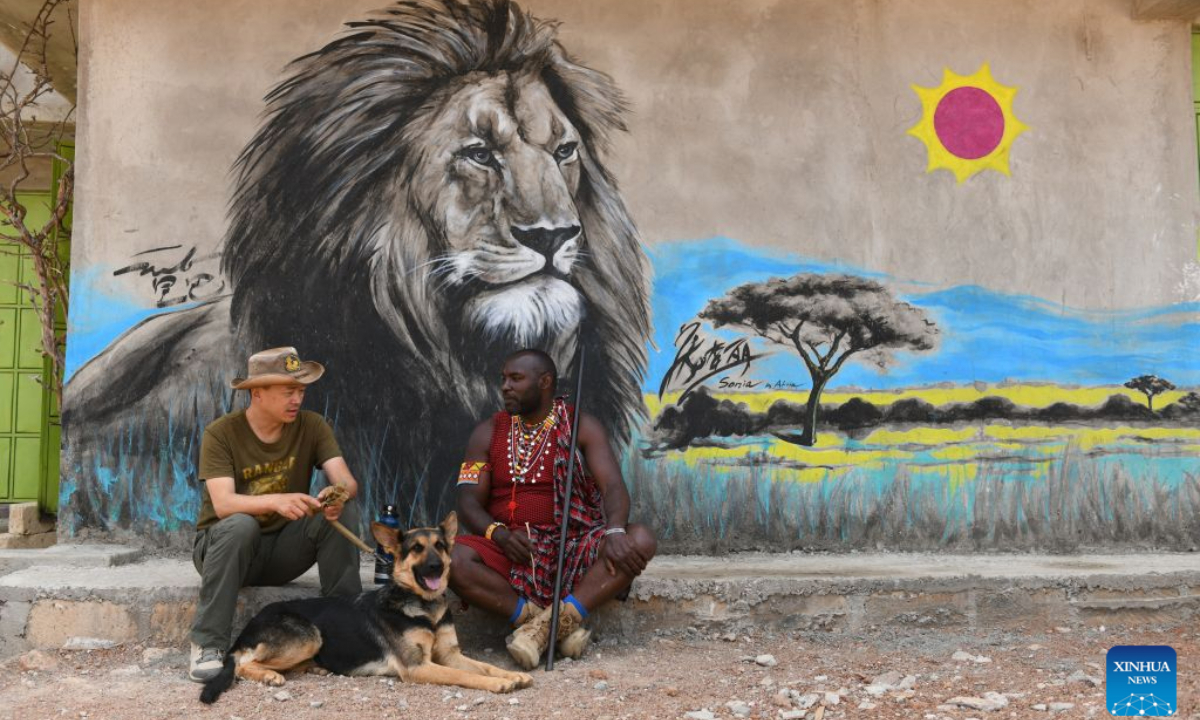
Among them is Chinese conservationist Zhuo Qiang, nicknamed "Simba," the Swahili word for lion. For him, this early-morning routine is driven by a broader mission to achieve human-wildlife coexistence.
In 2010, Zhuo left his job in China at the age of 37 and embarked on a less-traveled path: pursuing wildlife conservation in Kenya.
Without professional training in wildlife conservation, he found himself in a territory then dominated by Western organizations and local practitioners.
But Zhuo decided to stay. "I wanted to prove that Chinese people could also do wildlife conservation," he said.
Initially, Zhuo saw conservation largely through the lens of wildlife science: working in the field, studying animals and collecting data.
Living and working with Maasai communities changed that perspective. "The fate of wildlife was closely tied to the people sharing the same land," he said.
In the Maasai Mara ecosystem, livestock grazing is deeply connected to the livelihoods of pastoral communities. "If local people are asked to stop grazing but are given no alternative source of income, conservation cannot be sustainable," Zhuo said.
That principle laid the foundation for his work with the local community in establishing the Ol Kinyei Conservancy.
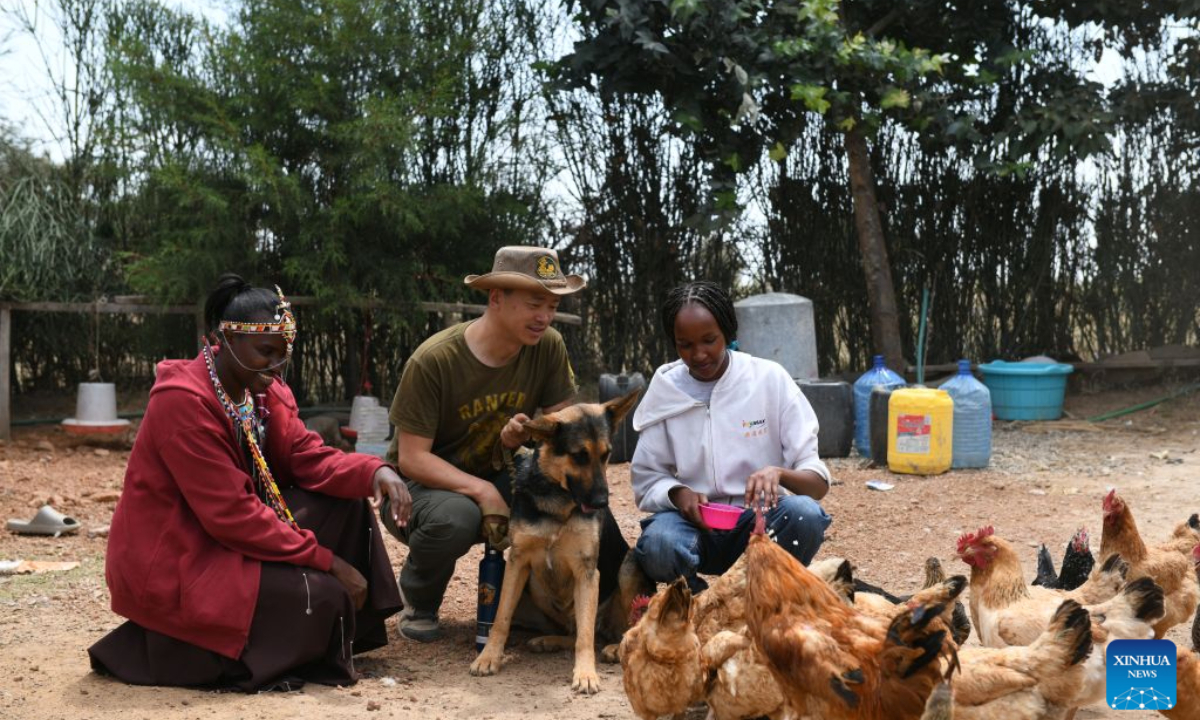
The area had suffered from prolonged overgrazing, with plants and the land itself deteriorating. Under the conservation model, local grazing land was leased and gradually restored, allowing vegetation to recover and creating a more suitable habitat for wildlife, said Zhuo.
Meanwhile, households participating in the scheme receive land-rental income and have access to jobs such as wildlife rangers and tourism workers. Their average annual income has increased from around 500 U.S. dollars to about 3,700 dollars, according to Zhuo.
Some residents from surrounding communities also learned from the experience and brought the approach back to their own grazing areas.
Nowadays, 26 private conservancies have been established around the Maasai Mara National Reserve, covering about 1,600 square km, according to Zhuo.
He believes the network of community conservancies provides additional safe space for wildlife to move and survive, extending conservation efforts beyond the boundaries of a single national reserve and into surrounding communities.
Simon Msago, a Maasai community leader in Ngoswani, said Zhuo's work encouraged more residents to take an active role in conservation.
In the past, many residents saw few direct benefits from wildlife conservation and had limited awareness of its importance. Today, community members are increasingly willing to work as rangers and protect wildlife, creating an effective layer of protection around the conservancies, Msago said.
"Human-wildlife conflict cannot be solved simply through restrictions and prohibitions. The key is to create alternative sources of income so that residents can gain tangible benefits from conservation," Zhuo said.
"That is what makes community-based conservation sustainable -- allowing local people to become part of wildlife conservation rather than bystanders with no stake in it."
While continuing his work in the Maasai Mara, Zhuo has also sought to strengthen exchanges between China and Africa in wildlife conservation.
In recent years, he has visited more than 30 nature reserves and national parks in China, sharing his experiences of community-based conservation in Africa with Chinese counterparts.
"Conservation practices in China and Africa each have their own characteristics, and there is much that the two sides can learn from each other," he added.
。 CANBERRA, Australia -- Advocates for constitutional change in Australia said they were devastated on Saturday by the defeat of a referendum that would have created an advocacy committee to offer advice to Parliament on policies that affect Indigenous people — the nation's most disadvantaged ethnic minority.Early counting showed that 57% of voters opposed the Indigenous Voice. Australian Broadcasting Corp. projections found New South Wales, Queensland, Tasmania and South Australia had rejected the amendment.The Voice needed majorities in each of at least four of the six states as well as a national majority for the referendum to pass. Voice advocate Tanya Hosch, who spent a decade on developing the model, told ABC: “On a personal level, I feel devastated.”“There's going to be a lot of pain and hurt and dismay and we’re going to need to take a moment to absorb that message and what it says,” Hosch said.Another advocate, Tom Mayo, said he was also "devastated” and blamed unfair attacks on the plan."We have seen a disgusting ‘no’ campaign. A campaign that has been dishonest, that has lied to the Australian people,” Mayo said.Opinion polls in recent months indicated a strong majority of Australians opposed the proposal. Earlier in the year, a majority had supported it, before the “no" campaign gathered intensity. Voice advocates had hoped that listening to Indigenous views would lead to more effective delivery of government services and better outcomes for Indigenous lives.Accounting for only 3.8% of the population, Indigenous Australians die on average eight years younger than the wider population, have a suicide rate twice that of the national average and suffer from diseases in the remote Outback that have been eradicated from other wealthy countries.The Voice would have been the first referendum passed since 1977 and the first ever to pass without the bipartisan support of the major political parties.。
Current article:http://vds0p.cengzaodengchawonin.cyou/list_wghmrz/cwesms.htm
Published on:14:25:17
 无间道二
无间道二 迅雷
迅雷